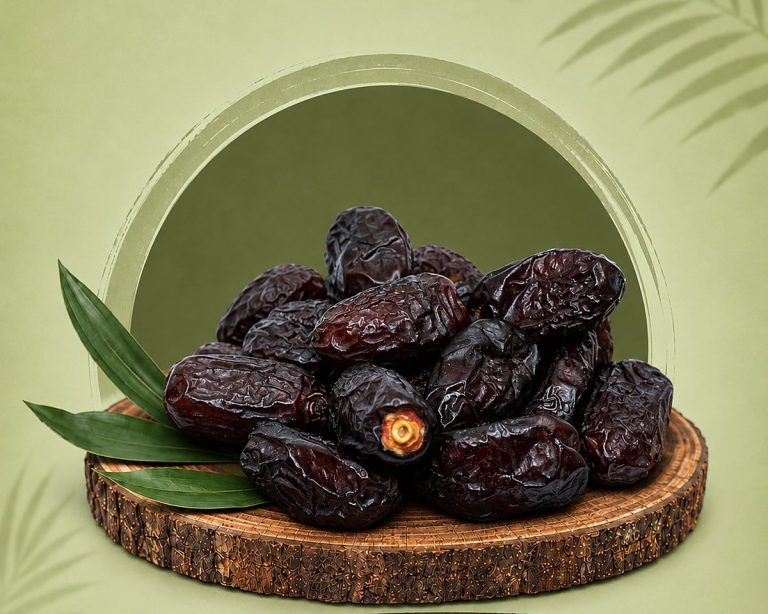
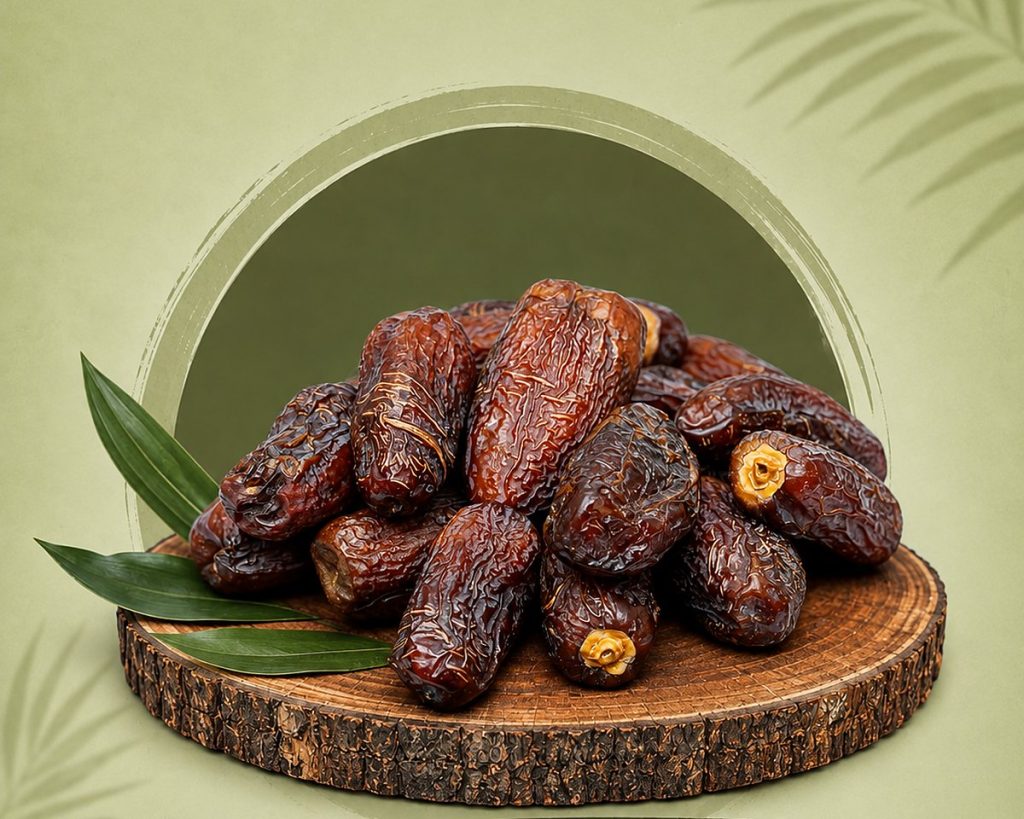
Dates have been a staple food in Arabia for thousands of years, and for good reason. They are filling, naturally sweet and easy to carry, and they bring a surprising amount of nutrition in a small package. Here is a simple look at what dates offer.
What is in a serving of dates?
Exact numbers vary by variety and harvest, but 100 grams of dates (about 4 to 5 Mejdool, or 8 to 10 smaller dates) typically gives you:
- Energy: about 280 calories, mostly from natural sugars
- Fibre: around 7 grams
- Potassium: around 650 to 700 mg, more than the same weight of banana
- Magnesium, copper, manganese and vitamin B6 in useful amounts
- Polyphenols: natural plant compounds with antioxidant activity
Dates contain almost no fat and no cholesterol.
Natural energy
Most of the sugar in dates is glucose and fructose, which the body can use quickly. That is why dates are a favourite for breaking the fast in Ramadan, as a snack before exercise, or on a long working day. Because dates also contain fibre, their energy is released more steadily than the energy from sweets or soft drinks.
Good for digestion
The fibre in dates supports regular digestion. A few dates a day, together with enough water, is an easy way to add more fibre to your diet.
Minerals your body needs
Potassium supports normal heart and muscle function and helps the body balance fluids, which matters on hot days and during fasting. Magnesium and copper play a part in turning food into energy and in keeping bones and nerves healthy.
A healthier sweet
Dates can replace refined sugar in many recipes. Blend them into milkshakes, stuff them with almonds or walnuts, or chop them into porridge and yoghurt. You get sweetness along with fibre and minerals, not just empty calories.
How many should you eat?
For most people, 3 to 5 dates a day is a sensible amount. Dates are nutritious, but they are also rich in energy, so it is easy to eat more calories than you planned.
A note for people with diabetes
Dates have a low to medium glycaemic index, but they are still rich in natural sugar. If you have diabetes or are watching your blood sugar, ask your doctor how many dates suit you, and enjoy them as part of a meal rather than on their own.
This article is general information, not medical advice. If you have a health condition, please speak to your doctor.
Want to taste the difference between varieties? Read our guide to Ajwa, Safawi, Mejdool and Ambar or browse the shop.